PodHood Docs
Start a Channel, bring in your team, publish the back catalog, and make the show usable by people and AI agents.
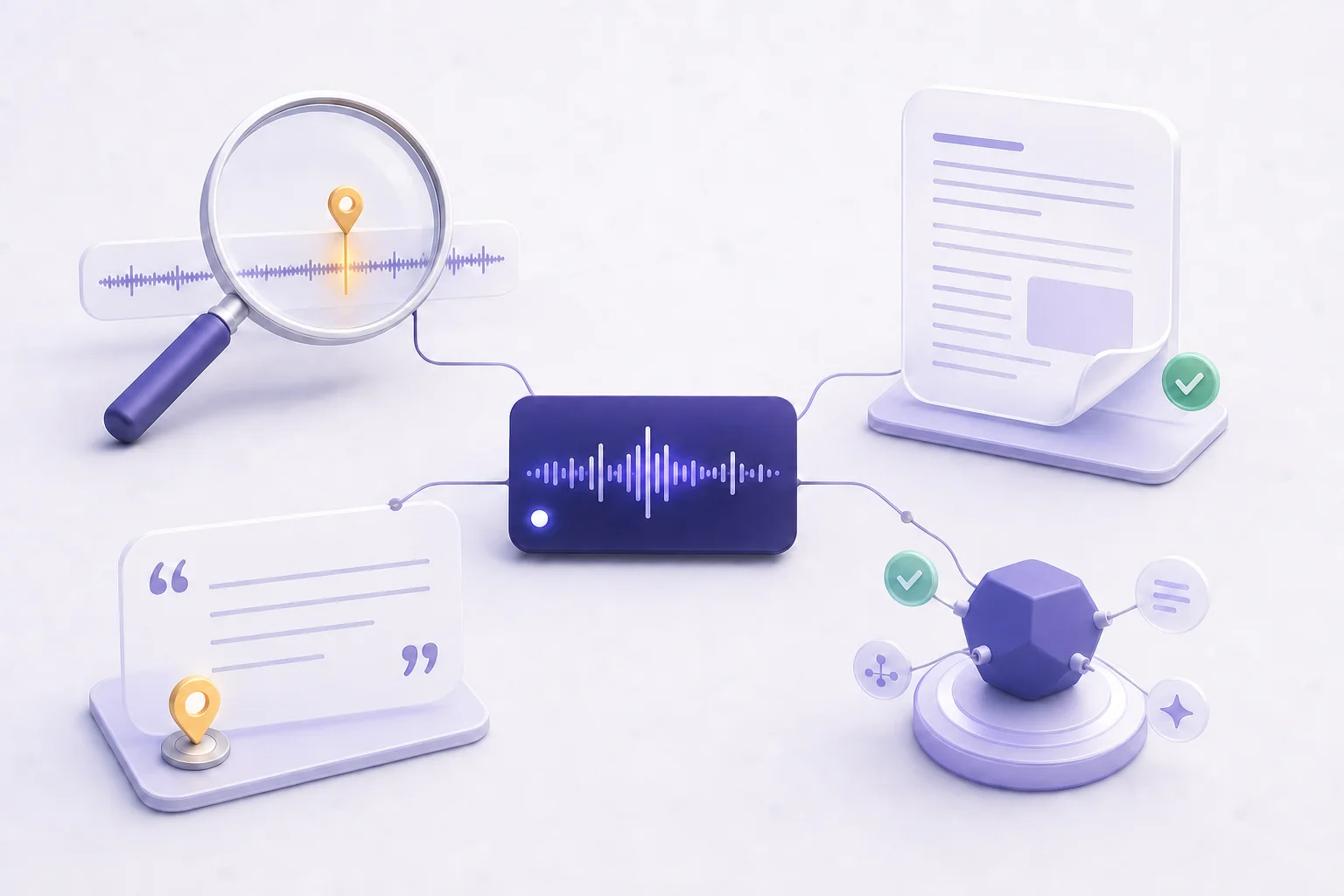
PodHood turns a podcast into a searchable, citable knowledge library. It mirrors the catalog from a YouTube channel or RSS feed, transcribes the episodes you choose to index, and derives a structured Brief — summary, chapters, key moments, Q&A, speakers, entities, and topics.
That structure powers three surfaces from one source:
- A public Library for listeners and search engines.
- A private Studio where your team indexes episodes and corrects the knowledge graph.
- Machine interfaces: anonymous, read-only MCP and Markdown for AI agents, plus the creator API (sign in or API key) for your own tooling.
You keep publishing where you publish today. PodHood mirrors the source; it does not replace your podcast host, YouTube channel, or existing website.
Start with your role
I own the show
Connect and verify the source, choose the public address, and watch the first Brief appear.
The Channel was built for me
Accept the invitations, receive ownership, and put billing on your account — the catalog is already live.
I am joining the team
A first-hour checklist for owners, admins, editors, and the person testing AI access.
I operate the catalog
Understand sync versus indexing, choose a backfill, and know exactly when an episode goes live.
I am connecting an agent
Connect the Channel's search tool, retrieve grounded quotes, and preserve timestamped citations.
I want my content back out
The creator API & MCP: transcripts, chapters, and key moments — drafts included — for your repurposing pipelines.
Recommended rollout
First 15 minutes — connect and verify
The Owner signs in, pastes the exact YouTube channel URL or RSS feed URL, completes the ownership check, and waits for the newest episode's activation Brief. Start with the Quickstart.
First hour — set the operating baseline
Settle the slug and podcast language, check the Owner's Plan and Credits, connect a custom domain if desired, then invite the small group that will operate the Channel. Follow the Team onboarding guide.
First week — index deliberately
Choose the episodes that best represent the show, index them in batches, correct important speaker/entity mistakes, and validate the public Library, MCP search, Markdown pages, and Google-facing surfaces before doing a full backfill.
Core guides
Plans & credits
Who pays, what 20 credits per hour means, and how plan grants, top-ups, and ownership work.
Studio & your team
Episodes, comments, subscribers, roles, speaker corrections, and knowledge-graph curation.
Your Library
What the audience gets: searchable episodes, transcripts, hubs, subscriptions, and Connect AI.
Get found & cited
The crawlable and agent-readable surfaces, plus a practical launch verification checklist.
Analytics
Who finds your Channel: Library visitors and their sources, AI referrals, and the questions AI agents ask.
Clips
Turn indexed episodes' key moments into captioned vertical video clips for Shorts, Reels, and TikTok.
The shape of the product
| Term | Meaning |
|---|---|
| Channel | One podcast on PodHood, connected to exactly one YouTube channel or RSS feed. It is the unit of Studio access and the public address. |
| Owner | The one accountable member. Their Plan and Credits fund every indexing action on the Channel, even when another member clicks Index. |
| Verification | The ownership proof required before the Channel is created — a read-only YouTube check, a code sent to the feed's owner email, or a manual PodHood-assisted path. |
| Sync | Mirroring catalog facts from the source. Sync does not transcribe or publish an episode. |
| Indexing | Transcribing an episode and producing its Brief. The first successful indexing is what publishes that episode to the Library. |
| Brief | The episode's derived structure: summary, chapters, key moments, Q&A, speakers, entities, and topics. |
| Library | The public site at <slug>.podhood.com or a verified custom domain. It contains published episodes only. |
| Member | A person with private Studio access. Members are separate from Subscribers, who follow the public Library. |
| Credits | The Owner's prepaid indexing balance. One hour costs 20 Credits; Sync, Search, MCP queries, Translation, comment analysis, and clip rendering do not draw from it. |