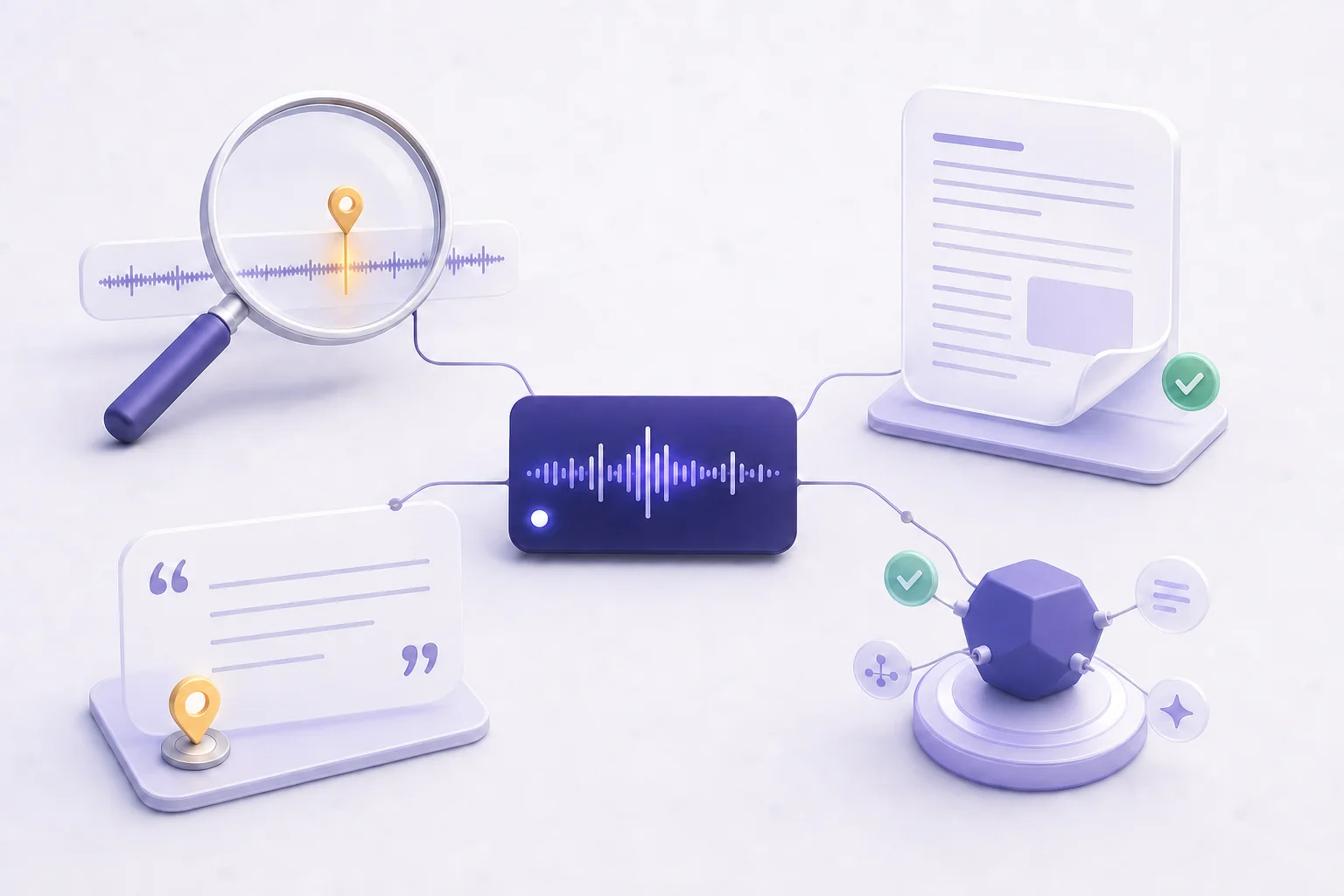
Search your podcast to the exact second.
Your audience shouldn’t have to scrub through hours of audio. PodHood makes every episode searchable by what was actually said — and jumps them straight to the moment.
A search engine for your back catalog
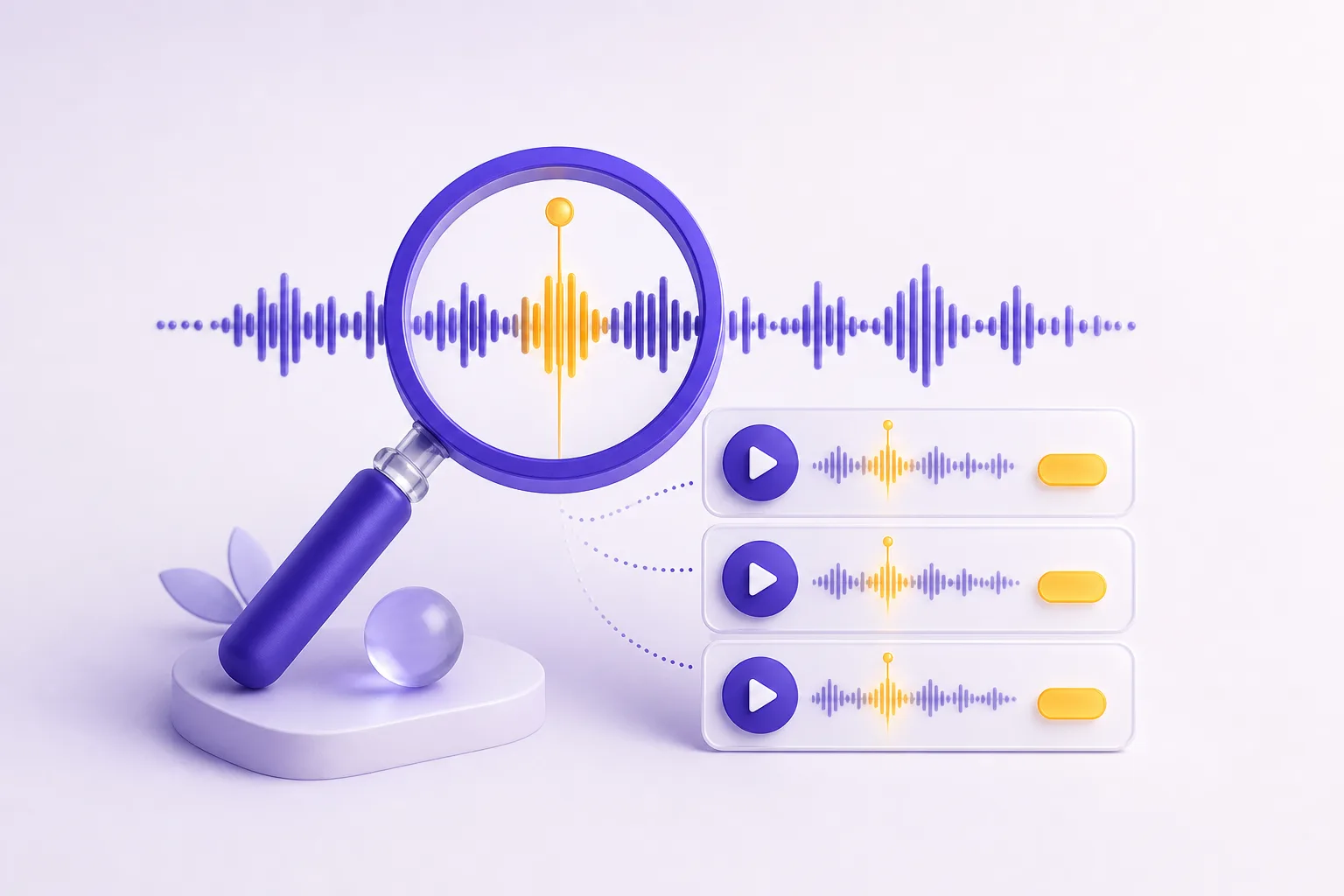
Hybrid retrieval over structured episodes — matching by meaning, blended with keyword precision — so your audience lands on the exact moment, not a page of near-misses.
Search by meaning
Listeners find moments by what they mean, across your entire catalog — while exact names and phrases still hit.
Structured filters
Narrow by speaker, topic, entity, or episode. The Brief’s structure powers real filtering.
Word-level transcripts
Every phrase is aligned to the audio, so search results link to the precise second.
Jump to the moment
Results open the player at the exact timestamp — no scrubbing, no guessing.
Why can’t listeners search inside podcasts?
Because podcast apps search metadata, not audio. Titles and descriptions are indexed; the hours of conversation inside the episodes aren’t. A listener who remembers a moment has no way back to it except scrubbing.
That’s a real cost for a back catalog: your most valuable answers are trapped at minute 47 of episodes nobody can query. PodHood indexes what was actually said, so the whole archive becomes searchable content instead of a list of titles.
What is semantic podcast search?
Search that matches meaning, not just keywords. A listener asks about a topic in their own words, and it finds the moments where it was discussed — even when the phrasing on air was completely different.
It works because search runs over the structured Brief, not a raw transcript: episodes are decomposed into key moments, speakers, entities, and topics, so results can be filtered and ranked by what a moment is about, not just the words it contains.
How precise are the results?
To the second. Every transcript is word-level aligned to the audio, so each result deep-links to the exact moment and opens the player right there — no scrubbing, no guessing.
Filters narrow the hunt further: by speaker, topic, entity, or episode. Finding the moment a specific guest made a specific claim goes from a memory exercise to one query.
A great answer buried in hour three of an episode may as well not exist. PodHood surfaces it in one search.
Frequently asked questions
Yes. PodHood mirrors your channel — every episode, past and future. Index your back catalog once and the full archive is searchable; new uploads join automatically.
On your Library, the public website PodHood publishes for your show. It works in any browser, and every plan lets you host it on your own custom domain.
Yes. Connect a YouTube channel and every video's spoken words become searchable to the exact second — the same hybrid search a podcast feed gets. For talk content on YouTube, it's the searchable archive the platform itself never gives you.
Both. Retrieval is hybrid — semantic matching finds moments by meaning, blended with keyword precision so exact names and phrases still hit. Results can be narrowed by speaker, topic, entity, or episode.
Yes. Any transcript can be translated on demand into more than a dozen languages — from Spanish and Japanese to both Chinese scripts — shown bilingually under the original, so the search-to-read path works for a global audience.
PodHood checks your channel hourly and indexes each new episode on its own, so uploads become searchable shortly after they publish — with no manual step.
No — it’s the same index. The structure that powers listener search is what search engines crawl as pages and what AI agents query over MCP. One index, three audiences.
Grow from episodes you’ve already made.
Connect a YouTube channel or podcast feed — your back catalog imports in minutes, and every episode becomes another way for new listeners to find you. Free to start — no credit card.
Get started